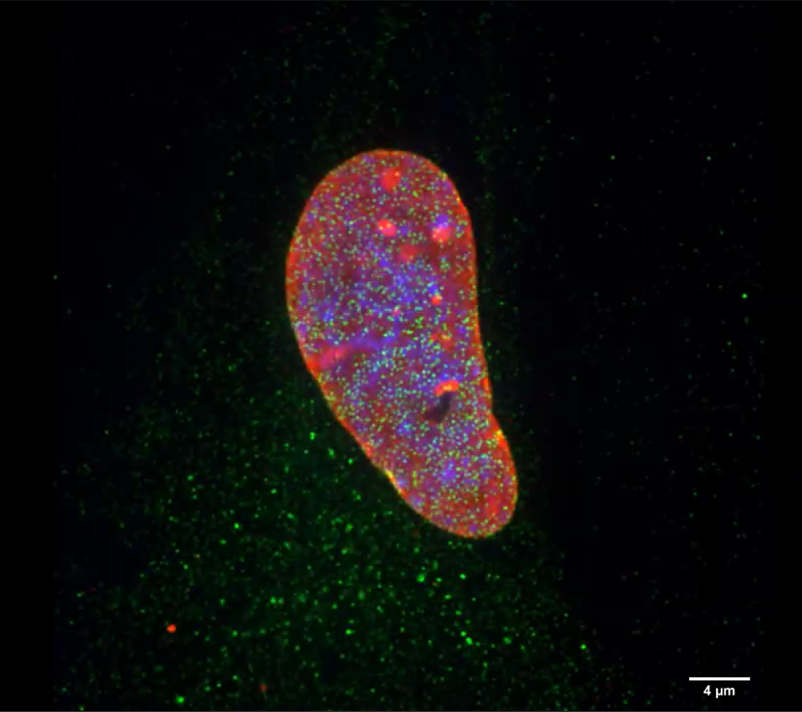
When studying cancer, attention usually focuses on the genes and molecules that regulate cellular activity. However, a team at the Biofisika Institute is investigating another, lesser-known but increasingly relevant factor: the ability of cells to sense the physical properties of their environment.
On the occasion of Breast Cancer Awareness Day, the researchers aim to raise awareness of a line of research that seeks to answer a fundamental question: what happens when cells detect that the tissue surrounding them is becoming stiffer? The answer could be important for gaining a better understanding of diseases such as breast cancer. Several studies have shown that tumors tend to have stiffer tissues than healthy ones, and that these physical changes can alter cell behavior. In some cases, cells respond to these signals by adopting characteristics associated with more aggressive forms of the disease.
This phenomenon is studied by mechanobiology, a discipline that examines how physical forces and properties influence living systems. At the Instituto Biofisika, researchers are working to understand how these physical signals interact with the biochemical signals that have traditionally been the focus of biomedical research.
“For many decades, mechanical forces have not been taken into account when trying to understand biology and disease,” explains Ion Andreu, an Ikerbasque researcher at the Instituto Biofisika. “However, we now see that they play a central role in processes ranging from embryonic development to aging, as well as in diseases such as breast cancer.”
The research is being carried out by a multidisciplinary team that also includes, among others, Maddi García Ayerbe, a predoctoral researcher, and Cristina de la Parte, a research technician. Their goal is to understand the fundamental mechanisms through which cells integrate physical and chemical information from their environment to determine how to grow, move, or respond to changes in tissues.
The research team emphasizes that their work is not aimed at developing an immediate treatment. Rather, it is basic research focused on generating knowledge about complex biological processes that are not yet fully understood. This knowledge, they point out, could lay the foundations for future biomedical applications.
As emerging disciplines such as mechanobiology become increasingly integrated with more established fields such as biochemistry, scientists hope to gain a more comprehensive understanding of complex diseases such as breast cancer.
.png)

