Maria Forsyth, an Ikerbasque researcher at POLYMAT, the polymer science and technology center affiliated with the University of the Basque Country/Euskal Herriko Unibertsitatea (EHU), has received one of the most prestigious and competitive grants awarded by the European Union: an ERC Advanced Grant under the Horizon Europe program. The grant is aimed at senior researchers with an established scientific track record, giving them the freedom to pursue ambitious, curiosity-driven projects at the frontier of knowledge.
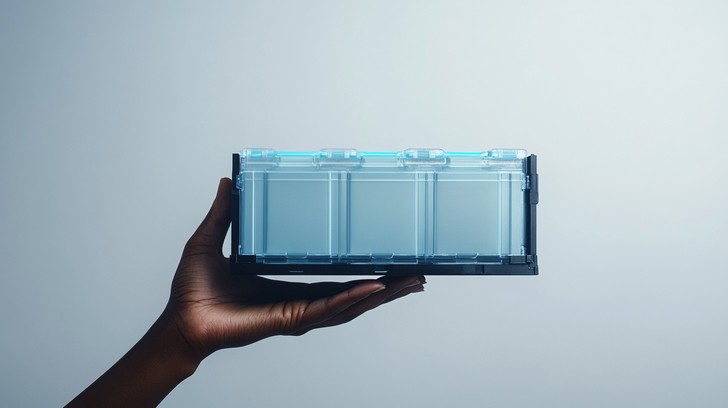
The project, called POLARIS, has been awarded nearly €3.5 million and aims to advance knowledge for the development of high-energy-density solid-state sodium batteries known as “anode-free” batteries.
Sodium batteries are considered a key technology for the future because sodium is abundant, they reduce dependence on critical minerals such as copper, cobalt and nickel, and they offer greater safety potential. However, current devices still store less energy per kilogram, known as energy density, than lithium-ion batteries, which limits their large-scale application.
POLARIS will address this challenge on two fronts: first, by designing new solid-state polymer electrolytes, the material that enables sodium ions to move inside the battery, based on polymeric ionic liquids (PolyILs), which provide greater stability and safety; and second, by controlling the contact between the polymer electrolyte and the current collector to form the anode, where dendrites usually originate. Dendrites are small metallic branches that shorten battery life. The intended result is safer, longer-lasting solid-state sodium batteries with higher energy density.
María Forsyth
María Forsyth, who earned a PhD in Physical and Materials Chemistry from Monash University in Australia in 1990, is currently an Ikerbasque researcher at POLYMAT, a member of the scientific committee of CIC Energigune and an adjunct professor at Deakin University in Australia. She is a Fellow of the Australian Academy of Science (FAA), the Royal Australian Chemical Institute (FRACI) and the International Society of Electrochemistry (ISE). Professor Forsyth has worked at the forefront of energy materials research since receiving a Fulbright Fellowship in 1990, and has consistently made significant discoveries, including in polymer electrolytes, ionic liquids and organic plastic crystals.
Her research has focused on understanding charge transport within these materials, as well as the metal/electrolyte interfaces present in all electrochemical applications. She is the co-author of more than 900 peer-reviewed scientific journal articles, book chapters and conference publications, with more than 56,000 citations and an h-index of 114 (Google Scholar, June 2025). Over the past 10 years, she has delivered more than 70 invited and plenary lectures, most of them at leading national and international conferences on energy and battery materials. She holds 17 patents and is co-founder of the startup DyNati Energie Pty Ltd, a deep-tech company dedicated to developing sustainable next-generation batteries.
.png)

